Key Takeaways:
Bad commercial parking lot drainage in Tampa setups ruins pavement fast when severe coastal storms hit. Blocked drains cause standing water that rots your asphalt base, leading to complete structural failure. Smart property managers prevent severe water damage and stay compliant with city codes by keeping up with concrete curbing repair and regular catch basin cleaning before the storm hits.
_________________________________________________________________________________________________________
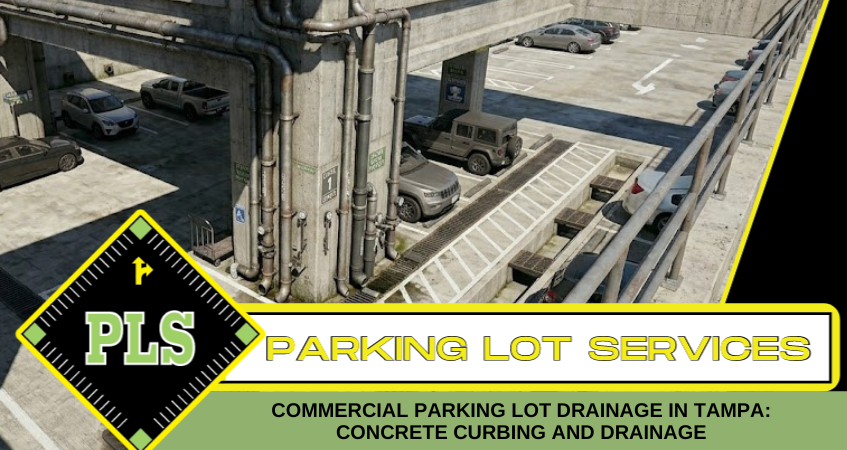
Anyone running a business in the Tampa Bay area knows how fast a summer afternoon storm fills up a parking lot. If your commercial parking lot drainage system is not up to par, that water turns into a costly nightmare.
Pavement acts like a sponge when water has nowhere else to go. Taking a proactive approach keeps your lot safe and stops costly repairs before they start.
What are the Tampa city regulations for parking lot drainage?
The City of Tampa does not play around with water runoff. Chapter 21 of the Tampa Code of Ordinances lays out strict rules for stormwater management Tampa properties must stick to.
These local laws control how much stormwater your property can dump into the public sewer system during a heavy downpour.
It all comes down to your lot’s impervious area. An impervious area is simply a hard surface like asphalt or concrete that will not let water soak down into the dirt. Because the water cannot sink in, it has to run off somewhere. If your lot suffers from poor drainage, you face steep city code fines.
Proper code maintenance requires clean storm drains that handle heavy rainfall without flooding out your neighbors.
How do concrete curbing and catch basins provide parking lot flooding solutions?
Think of your concrete curbing as a guide wall. It forces rushing storm water straight down into your catch basins. When curbing breaks, water floods your landscaping or pools right along the vulnerable edges of your asphalt.
This sitting water accelerates parking lot fading and cracks the pavement.
Getting a fast concrete curbing repair fixes the flow. Once water pours into your standard catch basins, the system traps trash while letting the clean water flow away through buried pipes. Commercial property owners and apartment owners need to get regular catch basin cleaning done. Sand, leaves, and trash quickly block these grates.
For problem spots that always flood, adding trench drains or French drains offers excellent parking lot flooding solutions.
Why is dumpster pad concrete repair necessary for operational safety?
Heavy garbage trucks wreck standard pavement. If your dumpster area uses regular asphalt, those massive wheels leave deep ruts. These low spots collect nasty standing water and grease runoff, creating an unsafe, slick mess for your workers.
A solid dumpster pad concrete repair replaces weak asphalt with a heavy-duty, concrete-encased pad built for heavy loads.
The new pad must slope correctly toward your drainage system. This setup cuts down on standing water, keeps your crew safe, and keeps you aligned with Florida EPA stormwater compliance rules by keeping pollutants out of the public water supply.
What steps are required for water basin repairs?
When your underground drains fail, the dirt around the metal grates washes away. If you notice a dip or a hole in the asphalt right next to a drain, you have active drainage issues.
The brick walls inside the drain crumble over time from constant water pressure, creating dangerous sinkholes.
Proper catch basin repairs and water basin repairs stop this damage before it ruins the whole lot. Here is how a paving crew fixes the problem:
- Cut out the broken asphalt surrounding the failing drain structure.
- Rebuild the shifting brickwork or concrete walls inside the basin.
- Pour a thick concrete collar around the heavy iron frame to lock it in place.
- Apply hot crack sealing to the seam where the concrete meets the asphalt to block out moisture.
Catching these drainage solutions early prevents the severity of the problem from breaking your budget later.
FAQs
How do French drains differ from trench drains in commercial parking lots?
French drains use a perforated, buried pipe surrounded by gravel to absorb water into the soil over a wide area. Trench drains are long, concrete-lined surface channels covered by heavy-duty grates that quickly collect and move large volumes of surface water off the pavement.
What happens if a property violates Florida EPA stormwater compliance rules?
Violating these rules can lead to heavy daily fines, forced closures, and mandatory remediation work. Commercial properties must make sure their runoff does not pollute local public water sources with oils, chemicals, or loose trash.
How does standing water cause structural damage to commercial parking lots?
Standing water seeps into the small cracks of the asphalt surface. Over time, it weakens the stone foundation below. When heavy vehicles drive over this soft foundation, the asphalt sags and breaks apart, resulting in deep potholes and expensive structural failures.
Why does poor drainage accelerate parking lot fading?
When water sits on asphalt for long periods, it breaks down the liquid asphalt binders that lock the stones together. Combined with hot Florida UV rays, this water pooling speeds up surface oxidation, causing gray color fading and surface unraveling.
Protect your commercial facility from severe weather and legal penalties with a dependable drainage solution. Parking Lot Services (PLS) offers professional drainage inspections, structural repairs, and parking lot maintenance tailored to local business standards.
Contact Parking Lot Services (PLS) at (813) 880-9100 to Get a Free Quote Today.