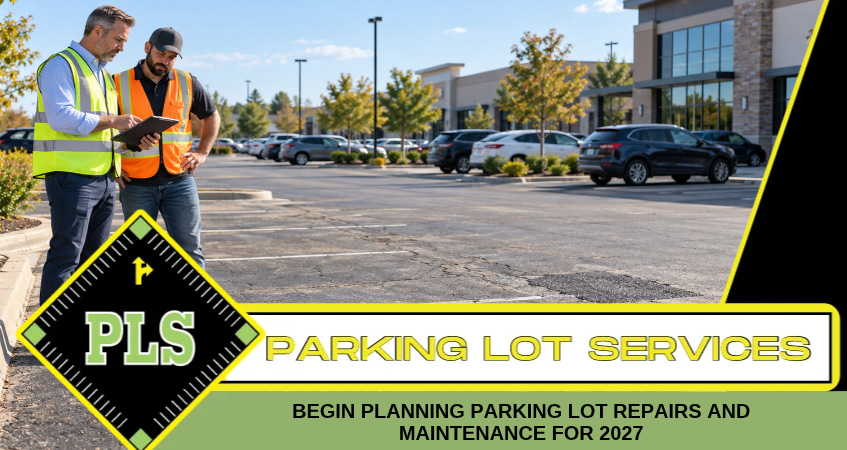
As a commercial property owner or manager, maintaining safe pavement is essential for protecting your real estate investment. Now is the ideal time to begin planning parking lot repairs and maintenance for 2027 to ensure proper budget allocation and contractor scheduling.
Key Takeaways
- Proactive Budgeting: Early parking lot maintenance planning helps secure necessary funds in your 2027 capital budget before sudden surface failures occur.
- Routine Inspections: Scheduling an inspection to identify surface wear, cracks, and structural flaws gives you time to prioritize maintenance projects.
- Cost Savings: Investing in preventative maintenance like crack sealing and sealcoating prevents severe pavement deterioration and saves money over time.
- Water & Sun Defense: Fixing standing water and protecting asphalt from UV exposure keeps the subbase strong and extends pavement lifespan.
- Streamlined Scheduling: Partnering with an experienced contractor early ensures preferred repair dates, minimizing disruptions for tenants and visitors.
Why Early Parking Lot Maintenance Planning Matters
Managing a commercial property requires balancing asset value with operational expenses. Pavement is one of the largest physical assets on any commercial site. Taking a proactive approach to pavement care helps you avoid emergency repairs that disrupt business operations and strain financial reserves.
Early parking lot maintenance planning allows facility managers to evaluate pavement conditions before minor flaws turn into major safety hazards. Setting up structured maintenance schedules well in advance gives you control over financial planning. Rather than reacting to sudden potholes, you can phase projects across the fiscal year.
Planning early also provides a distinct advantage when securing contractor services. Commercial paving contractors fill their calendars months ahead of time. Establishing your scope early lets you lock in favorable scheduling windows that minimize vehicle disruptions for your tenants and customers.
Conducting an Inspection to Identify Damage
Before creating a budget or issuing a scope of work, you must understand the exact state of your pavement. A thorough physical inspection to identify existing wear is the foundation of any successful maintenance strategy.
Walk your property systematically and look for subtle signs of wear. Pay close attention to high-traffic areas, delivery routes, and water collection points. Documenting issues with photos helps you track structural changes over time.
During your site walk, keep an eye out for key indicators:
- Surface Fading: Dark black asphalt turning light gray indicates the outer binder is wearing away.
- Fissures and Cracks: Small hairline splits often appear before larger structural failures occur.
- Depressions: Sunken areas hold water and point to subbase settling.
- Crumbled Edges: Broken concrete or deteriorating edges create trip hazards along walkways.
- Faded Markings: Dull stall lines and missing accessibility symbols reduce traffic order.
If you manage multiple properties, ranking each location by pavement condition helps property owners distribute capital funds where they are needed most.
Common Causes of Pavement Deterioration
Understanding why pavement breaks down helps you choose the right repair methods. Commercial asphalt endures continuous mechanical stress and environmental exposure every day.
Heavy vehicle traffic and turning motions compress the upper asphalt layers, breaking down the internal binder. Solar UV exposure accelerates oxidation, causing the binder to dry out and become brittle.
Water is another primary driver of rapid pavement deterioration. When surface cracks remain open, rainwater seeps into the underlying subbase and softens the supporting soil. In areas where water cannot drain off properly, standing water forms. Prolonged exposure to standing water weakens the asphalt bond, leading to alligator cracking and crumbling.
Addressing cracks, potholes, and subbase erosion stops water from destroying the base. Left unchecked, poor drainage problems quickly turn minor surface fixes into complete structural repaving projects.
Effective Parking Lot Maintenance Solutions
To keep your lot safe and smooth, you need a combination of targeted repair techniques. Implementing effective parking lot maintenance involves matching the right service to the specific type of wear present on your property.
- Crack Filling and Crack Sealing: Crack filling and crack sealing block water from reaching the subbase. Rubberized sealants are injected into open cracks to create a watertight bond that expands and contracts with changing temperatures.
- Commercial Asphalt Repair: When potholes form, surface sealants are no longer enough. Quality asphalt repair removes damaged asphalt, stabilizes the underlying subbase, and installs fresh compacted hot-mix asphalt flush with the surface.
- Protective Sealcoating: Sealcoating acts as a protective shield for your parking lot. Applied over cleaned asphalt, sealcoat restores the rich black appearance while shielding pavement from sun rays, rain, and oil spills. Applying sealcoat every three to five years is a cost-effective way to extend pavement lifespan.
- Structural Asphalt Overlays: If your lot has surface wear but a solid subbase foundation, asphalt overlays offer an ideal solution. An overlay mills off the top damaged layer and applies a fresh lift of asphalt over the prepared surface.
- Drainage Repairs: Eliminating water pooling requires functional catch basins and sloped pavement. Fixing catch basins and resolving drainage issues prevents water from damaging high-traffic zones.
How to Prioritize Maintenance and Build Your 2027 Budget
Not every pavement repair needs to happen at the exact same time. When building your budget for 2027, divide your scope into clear priorities to manage cash flow effectively.
- Priority 1: Safety and Compliance: Address major potholes, trip hazards, broken catch basins, and worn ADA markings immediately to eliminate liability risks.
- Priority 2: Preventative Preservation: Schedule crack filling, spot patching, and localized repairs. Stopping active deterioration keeps repair costs manageable.
- Priority 3: Cosmetic Protection: Plan full-lot sealcoating, restriping, and smooth asphalt overlays to boost curb appeal and protect your investment.
Categorizing your pavement needs makes it much easier to align work with available funds. Working with an experienced commercial contractor allows you to build multi-year maintenance schedules that fit your budget.
Frequently Asked Questions
Why should commercial property managers begin planning parking lot repairs for 2027 right now?
Planning early ensures you secure adequate funding in your upcoming annual budget. It also allows you to reserve preferred contractor schedules before peak seasons fill up, preventing operational delays.
What is the difference between crack filling and sealcoating?
Crack filling addresses specific, deep fissures in the pavement to block water from reaching the subbase. Sealcoating is a protective liquid coating applied over the entire asphalt surface to protect against sun and water wear.
How often does a commercial lot need preventative maintenance?
Visual inspections should occur at least twice a year. Crack filling should be performed whenever new cracks open up, while sealcoating is typically applied every three to five years depending on traffic volume.
How do drainage problems hurt my parking lot?
When water collects on the surface or seeps under the pavement, it softens the supporting subbase. This causes the asphalt above to sink and crack, eventually creating costly structural failures like potholes.
Can parking lot repair and maintenance be completed without shutting down my property?
Yes. Professional contractors can phase repair work across weekends, evenings, or sectioned-off zones. This ensures your tenants and customers retain safe access throughout the project.
Partner with PLS for Your 2027 Parking Lot Needs
Proactive planning is the key to keeping your commercial pavement safe, durable, and visually appealing. Taking the time to inspect your site, fix minor issues, and set up a structured maintenance plan will save you thousands of dollars in long-term reconstruction costs.
If you are a commercial property owner or property manager looking for reliable parking lot repair and maintenance services, PLS is here to support you. Our team delivers complete pavement assessments, custom budgeting assistance, and expert repair solutions tailored to your property.
Contact PLS today to schedule your commercial pavement evaluation and get your 2027 maintenance plan on track!